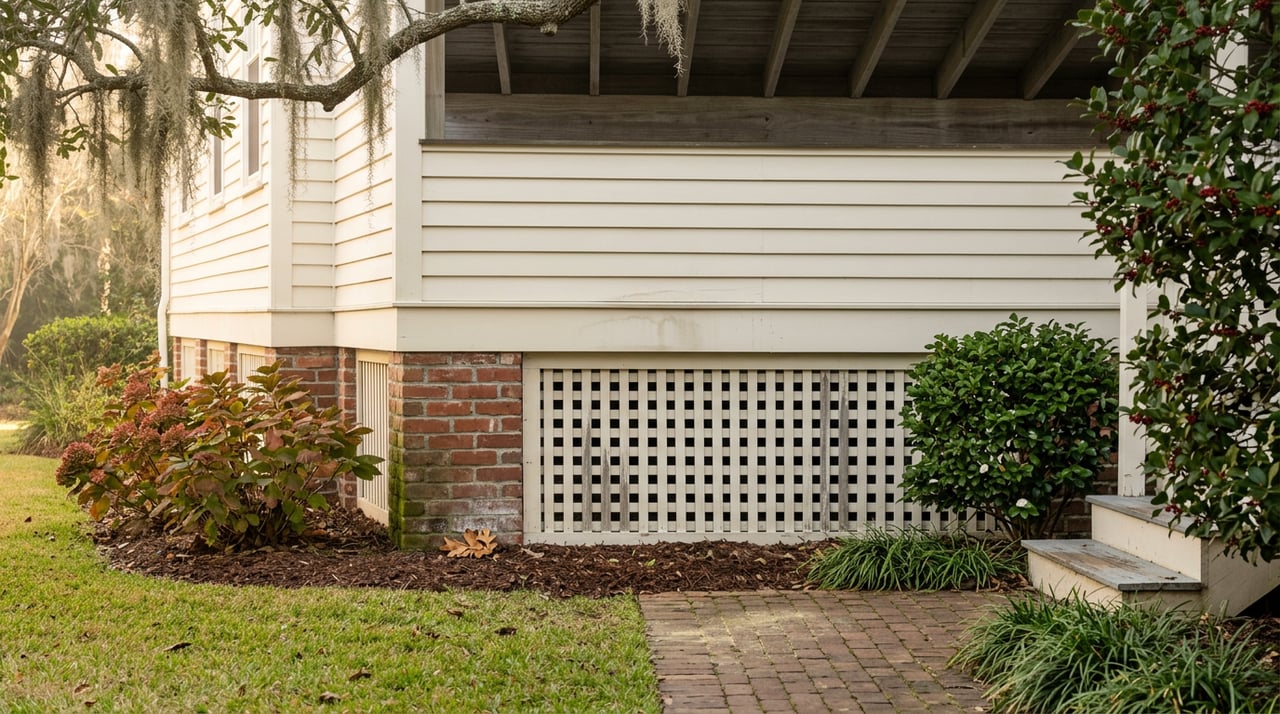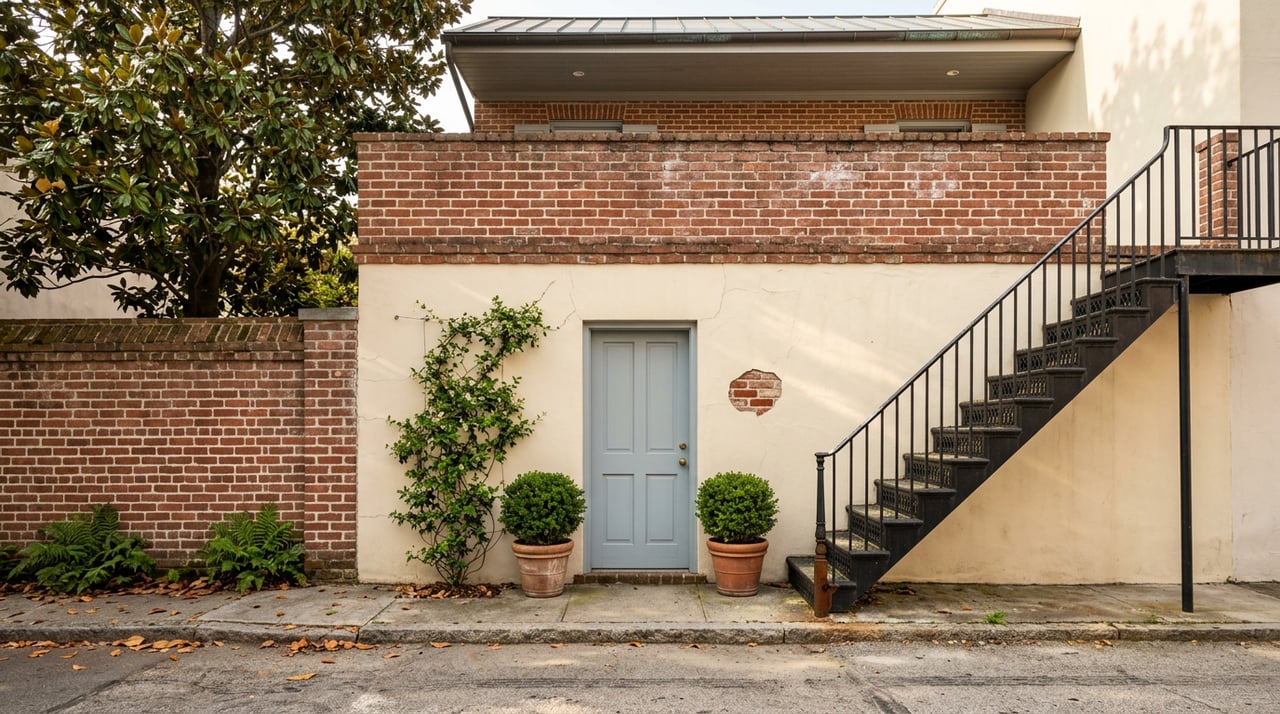
A downtown Savannah closing hands the buyer a warranty deed, a title policy, and a set of keys. It does not hand them the two documents that decide what the property can do the next morning: the Certificate of Appropriateness that governs any exterior change, and the Short-Term Vacation Rental certificate that decides whether the house can earn nightly income. Neither travels with the title. Both need to be priced into the contract before it is signed.
This is the mechanism most buyers only discover after they have already written earnest money into escrow. It is also the mechanism most sellers underestimate when they set a list price that assumes the buyer will keep operating the property exactly as it has been.
The overlay is older than most buyers realize
The Savannah Downtown Historic District overlay was established in 1966 and is one of the oldest local historic districts in the country, developed to preserve the city's historic character and to ensure that development recognizes, protects, and enhances Savannah's historic architectural heritage and city plan. That vintage matters because the review structure has had six decades to accumulate procedural detail. Any exterior change visible from the public right-of-way, including the lanes, triggers a COA.
The review body is the Historic District Board of Review. The HDBR was established in 1973 to protect the property associated with the Landmark Historic District, consists of nine members appointed by the Mayor and Aldermen, receives staff support from the Chatham County–Savannah Metropolitan Planning Commission, and meets the second Wednesday of the month at 1:00 p.m. at 112 E. State St.
One clarification that saves buyers real money: the HDBR only covers the Downtown overlay. The City of Savannah Historic Preservation Commission reviews and grants Certificates of Appropriateness for the Victorian Historic District, Streetcar Historic District, and Cuyler-Brownville Historic District. A property one block outside the Downtown overlay is on a different calendar with a different board.
Staff review vs. board review: the fork that decides your renovation timeline
The single most useful thing a buyer can learn before writing an offer is which side of the review split their planned work lands on.
| Review type | Typical scope | Timing |
|---|---|---|
| Staff review | Color changes, roof repair or replacement, awnings, stucco repair, brick repointing, shutters, windows | Up to 10 business days after a complete application |
| Board review | Rehabilitation, alterations, additions, new construction, signs, fences, demolition | Docketed to the next available monthly HDBR meeting |
Those categories come directly from the MPC's own instructions on what triggers each track. The trap sits inside a small procedural rule: three or more staff review items automatically becomes a Board Review application, and application requests for non-contributing structures are automatic Board Reviews. A buyer planning to repaint, replace windows, and swap a roof in one project has not scheduled three staff reviews. They have scheduled a board hearing.
Board projects also require a step earlier in the process. Per City Ordinance 3.19.4a, prior to the submittal of an application for a COA that will require review by the Savannah Downtown Historic District Board of Review, the applicant shall participate in a pre-application conference with MPC Staff. That is one more calendar item to price into a renovation contingency.
If your inspection turns up three exterior issues and you plan to address them in a single COA, assume a monthly meeting, not a ten-day staff turn. That is often the difference between closing on schedule and asking for a thirty-day extension.
Material selection is the other place where generic remodel assumptions collide with the overlay. Fences and walls facing a public street have to match the material and color of the primary building, and the ordinance prohibits chain-link, vinyl, PVC, corrugated metal, barbed wire, and razor wire. A buyer who priced a fence replacement using the Home Depot vinyl aisle has priced the wrong fence.
Submissions go to one place. All completed applications should be sent to the centralized email address [email protected], and applications sent directly to staff members may cause processing delays.
The STVR certificate: title transfers, income does not
The second document controls whether the property is a house or a small business. As of September 29, 2017, a 20 percent per-ward cap became applicable to non-owner-occupied parcels in the Savannah Downtown Historic District and the Victorian Historic District. Wards in Savannah are the small historic squares-and-surrounding-blocks divisions of the city, which means the cap operates at a very fine geographic scale.
Two rules do most of the transactional damage:
- STVR certificates are not transferable. Per Sec. 8-11012 of City Code, STVR certificates remain non-transferable. Under the STVR Ordinance, certificates are not automatically transferable to new property owners; a buyer must submit a new application within six months of the purchase, and cannot operate under the prior owner's certificate.
- Most downtown wards are already at the cap. The city maintains a waiting list on a first-come, first-served basis for property owners wishing to apply for a non-owner-occupied STVR certificate in wards that have reached the 20 percent cap. In practical terms, a non-owner-occupied buyer who does not qualify for a grandfathering pathway is buying the house without the income.
There is a narrow protection for buyers of existing STVR properties. Renewals of pre-existing STVR certificates issued before September 28, 2017 will not be denied on the grounds that issuance would exceed the per-ward maximum cap, and when a transfer of property title occurs for a parcel with a pre-existing STVR certificate, a new application from the transferee will not be denied on cap grounds if the transferee applies for a new certificate promptly. This is why the phrase "pre-2017 grandfathered STVR" carries a real price premium in the Downtown overlay, and why the six-month application clock is a hard deadline, not a soft suggestion.
Occupancy math is regulated as well. Occupants shall not exceed four adults for dwelling units with no more than two bedrooms, and for dwelling units with three or more bedrooms, the number shall not exceed two adults per bedroom. A three-bedroom carriage house does not sleep the eight guests a spreadsheet might assume.
Streetcar buyers face a different rule. In the Streetcar local historic district, all STVRs on parcels zoned TN-2 must have two or more dwelling units, one of which must be owner-occupied.
Why this matters more in the July 2026 market than it did two years ago
Savannah has moved from a seller-dominated market to a slower one, and slower markets give buyers room to ask harder questions before signing.
- Three-month median sale price ending May 2026 was $339,000, with homes taking a median of 82 days to sell compared with 57 a year earlier, according to Redfin's market page.
- Movoto's July 2026 snapshot of active listings shows a $399,000 median list price and 112 days on market.
- Houzeo's late-2025 read on the metro reports roughly 4.33 months of supply and a 96.38 percent sale-to-list ratio, which is a buyer-negotiating environment rather than a bidding-war one.
The numbers themselves are not the story. The story is that the extra days on market are days a buyer can use to request the STVR certificate history, to sit down with MPC staff for a pre-application conference before removing a due-diligence contingency, and to have their contractor confirm which planned changes are staff-reviewable and which will need to wait for a Wednesday afternoon downtown.
Questions this raises for a specific closing
If a listing describes the property as an active short-term rental, what should the buyer ask for in writing before removing due diligence? The current STVR certificate number, the date it was originally issued (pre- or post-September 28, 2017), the ward, and confirmation that the seller has not surrendered or allowed the certificate to lapse. The six-month application window starts at closing.
Does a COA transfer with the property if the seller had one approved but never completed the work? COAs are project-specific and time-limited, not permanent property rights. A buyer inheriting an approved-but-unbuilt project should confirm the COA's current status with MPC staff rather than assuming approval carries over.
What is the difference between the Downtown overlay and the Landmark District for review purposes? The HDBR was created to protect the property associated with the Landmark Historic District, but its jurisdiction as a review body is the local Savannah Downtown Historic Overlay District. A property can be a contributing resource in the National Historic Landmark District and also fall under HDBR review as part of the local overlay.
Are inspections different in the overlay? Standard home inspections are the same, but a buyer planning post-closing work should treat the pre-application conference with MPC staff as part of due diligence rather than a post-closing task. It is free and often reveals which parts of a renovation plan will not survive review.
Working the two certificates into a Savannah offer
The deed conveys the walls. The COA process governs what you can change about those walls. The STVR certificate governs whether the walls can host paying guests. Any Downtown offer that treats those three documents as one is under-priced on the risk side.
If you are writing an offer inside the Savannah Downtown Historic District, or preparing to list a property that has been operating as a short-term rental, working through the COA and STVR mechanics before contract is the single highest-leverage step in the transaction. Kimberly Pelletier with Engel & Völkers Savannah works these questions into the diligence period rather than discovering them at the closing table. Let's Connect.